Nov 29, 2025 in News Legal News
Legal News: Hydroplaning Crashes in Heavy Rain: Who’s at Fault When “Speed for Conditions” Applies?
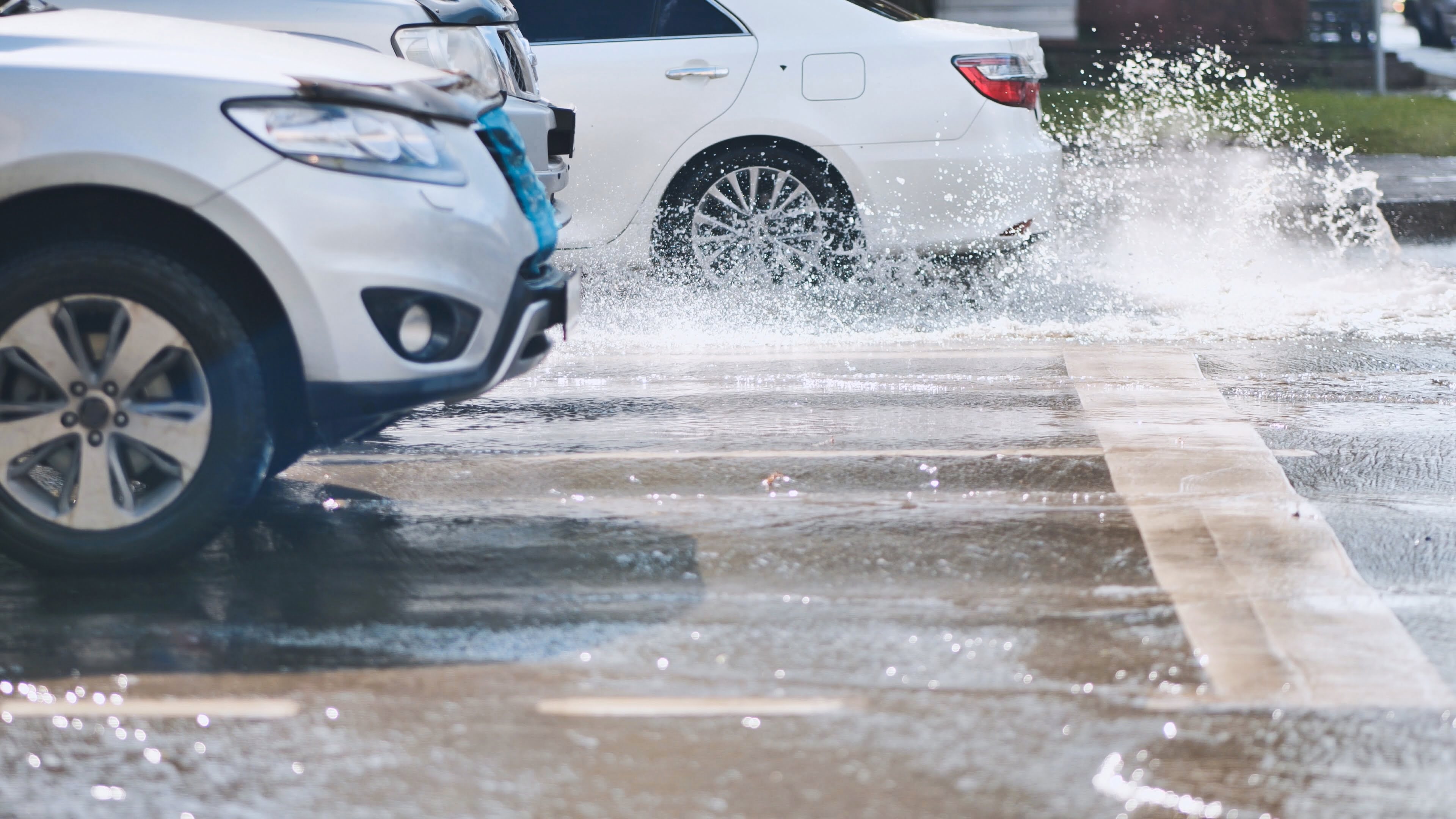
The legal principle of "speed for conditions" determines fault when hydroplaning causes a crash.
Heavy rain is a fact of life for drivers across Canada, where sudden downpours can turn busy 400-series highways into slick, dangerous waterways. One of the most terrifying and unpredictable hazards of driving in these conditions is hydroplaning—the moment a vehicle loses traction with the road surface due to a layer of standing water.
When a collision occurs following a hydroplaning incident, the legal question of who is at fault shifts immediately from simple speed to the more nuanced principle of “speed for conditions.” For victims of serious crashes in Ontario, navigating this complex area of liability requires expert knowledge, often turning a routine insurance claim into a complicated legal battle.
If you or a loved one has been injured in a weather-related accident, understanding how fault is assigned is crucial. This is where an experienced car accident injury lawyers comes into play—they can dissect the circumstances to determine if negligence, rather than just bad luck, was the true cause of the wreck.
The Legal Duty to Maintain Control: The Canadian Perspective
In Canadian law, every driver has a fundamental duty to operate their vehicle safely. This duty extends beyond simply adhering to the posted speed limits. In fact, a driver can be operating below the posted limit and still be found negligent if their speed was too high for the prevailing conditions.
The legal principle of “speed for conditions” is enshrined in provincial legislation, such as Ontario’s Highway Traffic Act (HTA), often overlapping with provisions related to careless driving or driving without due care and attention. For instance, the HTA requires that a driver operates their vehicle in a manner that takes into account the current state of the road, including weather and visibility. This is the official baseline for determining liability in a hydroplaning incident.
- Official Canadian Resource: You can review the specifics of this duty and related driving offences by consulting the Ontario Highway Traffic Act, R.S.O. 1990, c. H.8, particularly the sections pertaining to speed and careless driving.
A hydroplaning crash, by its very nature, suggests a loss of vehicle control. The key legal question then becomes: Did the driver take all reasonable precautions to prevent that loss of control?
How Courts Assign Fault in Hydroplaning Incidents
When a hydroplaning crash leads to a personal injury claim, the court or insurance adjuster must look beyond the initial skid and analyze the preceding actions of the driver who lost control. They typically consider several factors to determine if the driver was negligent. Evidence used by at fault accident lawyers and insurance companies in these cases includes:
- Witness Testimony: Accounts of how fast the vehicle appeared to be moving relative to others.
- Accident Reconstruction: Experts analyze skid marks (or lack thereof), vehicle damage, and final resting positions to calculate minimum speed.
- Dashcam Footage: Increasingly, footage provides definitive proof of road conditions and speeds.
1. Proof of "Excessive" Speed for Conditions
While hydroplaning can technically happen at any speed, it becomes far more probable and severe as speed increases. If the driver was travelling at 100 km/h in a 100 km/h zone during a downpour that reduced visibility to a few car lengths, a legal argument can be made that 100 km/h was excessive for those conditions.
If evidence confirms the driver was operating the vehicle at a speed that significantly reduced the tire's ability to displace water—often above 80 km/h, depending on tire condition and water depth—they will likely be found responsible for the resulting collision.
2. Vehicle Maintenance and Tire Tread Depth
Fault isn't always about speed; it can be about preparation. A driver has a legal obligation to ensure their vehicle is roadworthy. Tires with insufficient tread depth cannot effectively channel water away, making hydroplaning virtually inevitable. If a crash is demonstrably linked to tires that were below the minimum safe tread depth, this constitutes negligence on the part of the owner/driver.
This is particularly relevant in cases involving serious highway accidents. You can read more about the inherent risks in our detailed discussion on Navigating Serious Summer Highway Accidents in Ontario.
3. Was the Driving "Careless"?
Ontario’s HTA has a powerful legal tool known as "careless driving." Hydroplaning often leads to multi-vehicle pile-ups, and the driver who initiated the chain reaction by losing control may face a charge of careless driving, which is compelling evidence of negligence in a civil injury suit. The failure to slow down, coupled with a foreseeable risk of losing control on a visibly wet roadway, points directly toward a lack of due care and attention.
Contributory Negligence and the Role of High Speed Accident Lawyers
In many multi-vehicle hydroplaning crashes, fault is not 100% assigned to a single party. This is known as contributory or comparative negligence.
For example:
- Driver A hydroplanes and spins out, blocking a lane.
- Driver B is following too closely for the rainy conditions and collides with Driver A.
In this scenario, Driver A is primarily at fault for losing control, but Driver B may be found partially negligent (e.g., 20% or 30% at fault) for driving too fast or following too close to safely stop when confronted with a visible hazard.
If the collision involved excessive speeds—whether the speed caused the hydroplaning or exacerbated the severity of the impact—the complexities increase dramatically. Dealing with such cases requires specialized legal expertise. Our high speed accident lawyers are accustomed to handling the intense scrutiny and high-stakes nature of these personal injury claims, ensuring all aspects of negligence are properly addressed.
Navigating the Insurance Maze: Why You Need Legal Representation
When you are hurt in a hydroplaning crash, the insurance company for the "at-fault" driver will rarely concede liability immediately. They will argue that the crash was an "act of God," an unforeseeable event, or that you, the victim, also contributed to the collision. This is a common tactic to minimize their payout.
To successfully pursue a claim, you need a legal team that can counter the insurance company's arguments about weather and speed. We act as diligent accident benefit dispute lawyers, focused on securing comprehensive compensation for your injuries and losses. We work to establish:
- Foreseeability: The rain and standing water were visible, making the risk of hydroplaning foreseeable.
- Unreasonable Conduct: The at-fault driver's decision to maintain their speed was an unreasonable action given the foreseeable risk.
- Causation: The driver’s negligence directly caused the collision and your resulting injuries.
Successfully navigating the often aggressive pushback from insurance adjusters is critical to maximizing your recovery. We have written extensively on strategies for managing this crucial stage of the process in our guide on how to negotiate with insurance companies after an accident.
Moving Forward After a Hydroplaning Collision
Hydroplaning crashes demonstrate that in law, bad luck is rarely the full story. In the vast majority of cases, a loss of control on a wet road results from a driver failing to meet the legal obligation to slow down to a speed that is safe for the conditions.
If you are dealing with the aftermath of a serious weather-related collision, don’t accept the insurance company’s quick denial or low-ball settlement. It’s imperative that you speak with an expert Personal Injury Lawyer in Toronto to have the evidence reviewed and fault properly assigned.
To learn more about the attributes you should look for in a legal representative to handle your complex case, take a look at our resource: How to Choose the Right Personal Injury Lawyer for Your Case.
Neinstein Personal Injury Lawyers has decades of experience serving clients across Ontario, specializing in catastrophic claims resulting from complex motor vehicle accidents. Contact us today for a free, no-obligation consultation to discuss your claim.

Category Selector
Select a category relevant to you.
- Social Host Liability
- Tort
- Spinal Injury
- Road Safety
- Slip and Fall Claims
- Snowmobile Accident
- Product Liability
- Rail Accidents
- Recalls
- News
- Nursing Home Negligence
- Personal Injury
- Physical and Psychological Injuries
- Negligent Supervision
- Neinstein in the Community
- Medical Malpractice
- Motorcycle Accidents
- Long Term Disability
- Chronic Pain
- COVID-19
- Dog Bites Claims
- Events
- General
- Homeowner Liability
- JUUL & Vaping
- JUUL Vaping Lawsuit
- Lawyer Profile
- Legal News
- Legal Representation
- Liability
- Long-term Care
- Blogs
- Boating Accident
- Brain Injury
- Car Accident
- Accident Benefits Claims
- Auto Insurance
- Bicycle Accidents
- Water Accidents
- Wrongful Death
- In the Community
Area of Expertise
Personal injury
Personal injury claims come in all shapes and sizes. Our practice has represented clients seeking compensation from individuals, small businesses, corporate entities, medical professionals and facilities, and insurance providers. This diverse experience has made us one of Ontario’s most reputable and trusted personal injury law firms. If you or a member of your family has been catastrophically injured, contact a Neinstein personal injury attorney to discuss your legal options.
More Posts Legal SupportBook A Free Consultation
We will not charge you unless your case is successful.
At Neinstein we have been advocating for injured victims for over 55 years. Our committed and compassionate team will do everything necessary to help you and your family find solutions to the new challenges that arise from serious injuries.
Our team will ensure you access the proper healthcare support to aid in your recovery. While you focus on your rehabilitation, we will thoroughly investigate your case and guide you through the litigation process so we can achieve the maximum compensation that you deserve.